|
Digital Photographers' Newsletter
October 2011 Edition
Use of a Tripod - to have or not to have!
It cannot be argued that tripods can be a hassle to carry around with you but they help you take great shots in two ways.
Firstly, the time you take to get out the tripod, set it up and position the camera on it will slow your picture taking down. This means you’ll become more aware of other elements like composition of the image and lighting. The more focussed you are to external environment and conditions, the more likely you will be to take a great shot.
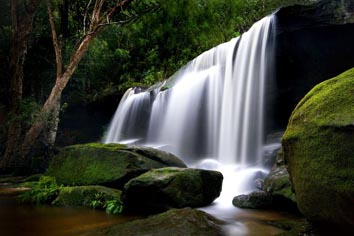
Secondly, you will have increased camera stability, allowing you to take razor-sharp images – particularly in low light situations.
In these low light circumstances, your camera might choose a really slow shutter speed to make sure enough light gets into the camera to get the shot.
If you’re holding your camera in your hand, chances are that the pictures you took were really blurry. That’s because your hands were shaking a little bit while you held camera. In photography, it’s a simple equation. No shake equals no blur. That’s why a tripod is so essential for low light photography.

A Handy Tripod Alternative
An alternative to the tripod is a ‘mono pod’. These only have one leg and don’t have the stability of a tripod, but they have a greater stability your hands alone – particularly if you lean them against something.
If you do a lot of mountain walking, there are also extendable ‘walking canes’ (like a ski pole) that are great for helping you walk up steep hills. The top unscrews to reveal a tripod mount underneath turning it into a mono pod. These are surprisingly easy to keep still, and they aren’t nearly as bulky as a full tripod setup.
You may not need to purchase a tripod if you are comfortable in improvising a horizontal surface to make a tripod – arms of chairs, railings, rocks etc. This is particularly useful when you’re taking landscape photos, and your camera lens is in the fully zoomed position.
Always make a rule to use your tripod or monopod for shutter speeds longer than 1/15 second.
Tripod Tip: If you have a lightweight camera, you might consider purchasing a ultra lightweight tripod. These are small in size and weight and easily fit into a backpack or camera bag. Larger tripods are designed for shooting with the much heavier digital single lens reflex (SLR) cameras using large lanses.
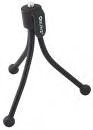
You can find out more about mini-pods on the Digital Camera Warehouse website
Capture that high speed action
How many times have you taken an action shot and missed the shot entirely because your camera was trying to focus? If you own a digital SLR, you can get your camera to pre-focus on a spot on the ground, and then you can go into burst-fire mode to capture an entire sequence of action with ruthless efficiency. You might like to try this

First, find the spot where you believe the action will take place. In the car example above, I chose the road right below there the bike will be when the shot is taken. With your lens set to “automatic focus,” press the shutter button halfway down to focus on this spot.
Once you’ve focused, switch the lens back to manual focus, and don’t do a thing. Now you don’t even need to hold the shutter button halfway down until the action starts happening. Just press the shutter button all the way down as soon as things get interesting.
When you do this correctly, you’ll get a nice clean sequence of action shots. With all of these, you can either pick your favorite and delete the rest, or you can get creative and put together your own action sequence photo. Don’t forget to set your lens back to automatic focus when you’re done. It’s important to always be aware of this setting.
Next TIPs for Digital Photographers will outline photographing fast cars anmd capturing the action and speed.
If you would like to receive my TIPs please send me an email and I will place your contact on my email network.
email 
|
FREE
Photography Basic Notes
If you would like a FREE copy of my Basic notes please email request with Subject "Basic Notes"
email
Brisbane Seminars in the Library
Our popular monthly Seminars on BASIC digital photography are held on the third Thursday of every month at the Everton Park Library, BRISBANE from 6-7.45pm.
These are FREE and are part of our studio community program with the BCC Everton Park Library.
Bookings are essential
Please call the Everton Park Library on
07 3403 7400
to reserve your place.
Local Photographers' Email Network
Are you currently a member of our email network receiving these Newsletters each month and advice of library seminars and discussion groups? You will also receive a FREE copy of my Tips For Digital Photographers as they are produced. If you would like to be included please send me an email.
Contact me to get your name on the list (FREE) and receive my regular TIPs For Digital Photographers. Samples of TIPS can be found in past Newsletters (see left column this Newsletter)
email
Lifetime Sunday Workshops
Our workshops are offered to assist you to learn the basics of digital photography and by better understanding become more competent and creative. You will marvel at the improvement of your images and be encouraged by your newfound skills.
Please register your interest Don't miss out on having your say to have your favourite subject presented.
email
workshop page
|