How to set your camera and lens to get 'best' focus in your images.
Last seminar I was asked what has to be done to ensure correct focus in an image. There are several things you need to be aware of to achieve this.
Select a 'sharp' aperture: You will need to select a very closed (small) lens aperture, say f11 to f22. An easy way to remember this is to relate a large number of things in focus, close and distant, to the large f-stop setting.
With the shutting of your aperture realise that the light reaching you film/ senser will reduce and you will have to reduce shutter speed to allow more light into the camera. Shutter speeds slower than the focal length of your lens will requie you use a tripod to reduce camera shake.
Choose a wide angle lens or lens setting (if you are using a zoom lens): The focal length of your lens also has an effect on the depth-of-field (DoF) within your image (how much of the image is in focus). A wide angle lens (24-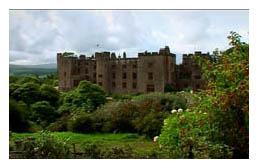 35mm) has a much larger DoF than does a telephoto lens (100-300mm). Use a wide angle lens for scenery and particularly land/ sea scapes.
When using a larger telephoto lens for portraiture be careful 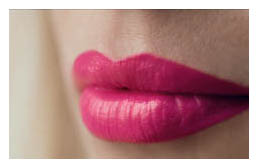 to accurately focus on the eyes of your subject (you may well find the ears are not in focus). The further away you get from your subject the less critical this DoF will become.
Of course you may sometimes not want everything in focus: Sometimes backgrounds can be a distraction in an image. Things that are separated from the background are 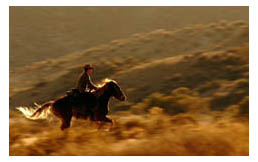 easier to emphasise and make the 'centre' of focus (CoF) in your image. A single CoF placed at one of the third points will help you to createt an eyecatching and emotive image.
DoF can also help in bluring the background. This also leads to good 'visual Depth' in your image- a three dimensional effect in your two dimensional final image. Beware that 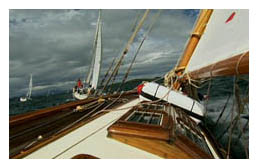 focus becomes more critical with increasing DoV (having foreground, mid-distance and background in focus.)
Do not be afraid to break the rules and focus on other details. Do make sure that you have a definite focus point.
The next question is of course, how to set up the camera to make sure it interprets your focus point location:Your camera will have choices of spot, centre weighted of full-screen focussing. I suggest you use the centre weighted initially. You will find spot more difficult to use and full screen focussing will not be as precise as the centre weighted.
Having set the focus type you then need to select the 'rectangular' area in yoiur viewfinder and place it over your centre of focus. Take first pressure on the shutter, then holding this, move the camera to compose the overall image. Most cameras will also take the light meter reading from this point of focus.
LCD camers with touch screen also allow you to select the focus (and light metering) by finger touch. This setting is held while you compose your image and then press the shutter button .
Please read your camera manual beforehand and bring your camera to the September Seminar as we will be having a workshop to individually explain how you set your own cameras. (unfortunately all cameras are different)
How to avoid lens flare in your images.
Lens flare can appear as bright circles or stars and sometimes a thin film over the image like fog. This usually results when you shoot into the sun or bright lights. Light enters the camera lens and bounces around the interior of the camera. Star effects usually appear when f-stop is closed down and rings can occur when using mirror telephoto lenses.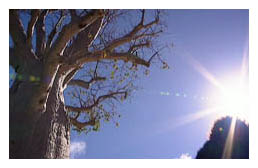
If lens flare is controlled in certain images you can get some interesting effects. Try to otherwise avoid flare by not shooting into the sun or bright lights (keep them to one side of you direction of shooting) and use a lens hood on your lens. This protrusion in front of the lens helps to reduce the light making contact with the lens elements.