Choosing the Right Phot Lab
Many have asked how they decide on the best photo lab for their print processing. I hope the following may be helpful.
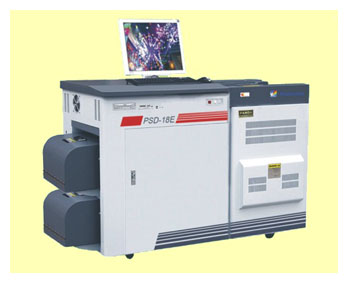
More and more it seems there’s a photo lab on every corner. You have the franchises, chain specialty stores, discount department stores, and now the chemist and grocery stores, all with one-hour labs not forgetting about all the mail order labs and on-line labs.
Which one do you use? The one with the lowest prices, or the most convenient location? Is there really a difference in labs? Unfortunately there is, and it can be dramatic.
The first thing to take into consideration is what services do you need from a lab, and how fast do you need your images back. Ask questions as to what services they offer. You will probably get a list of services that you may not need on a regular basis but may use in the future. Ask for a copy of their price list and a sample of their printing to determine the quality of print being offered.
It is most important to consider before taking your images somewhere to ask, “what business they’re in?” If you are going to take the time to create a series of photographs, do you want to entrust them with a lab whose main business is not photography?
Today many retailers have one-hour labs to bring people in so they can sell other things: hair care, first aid, food, clothes, and general products. How well trained are their lab people? Many of these labs are installing state-of-the-art printing equipment, but the machines are only as good as the people running them. If you're considering a one-hour lab for convenience, talk to their lab people. Ask them what services they offer and how long they take. Pretty early in the conversation you'll usually get a feel of how well they know their job and equipment.
If they seem confident about what they are doing, ask them how long they have been printing and also if they take photographs themselves. Ask why some pictures come out too light and why some come out too dark. If they can comfortably explain this to you, ask if they "fix" prints like these while printing or if the machine does it for them. If they try to convince you that the machine will automatically correct the print, move on to another lab.
As good as machines are getting, they cannot correct an image nearly as accurately as a skilled person adjusting the machine manually can. If the lab has a counter person, ask if you can talk to one of lab techs. If they have to get from behind the deli counter, move on to another lab.
Don't be afraid to ask the same kinds of questions in camera shops shops. You may be surprised to find out how little some of the techs know. Do you want untrained or inexperienced people learning on you images?
After you find a lab that seems to fit your needs and are comfortable that they know what they are doing, order a reprint of an image that you know is good. Take that print and compare it to your original print. Better still, have the same negative printed at a couple of other places and lay them all out next to each other (print the name of the lab on the back of each print so you will know whose is whose).
What you may see is that the prints that you thought were great now look not so good, or vice versa. Choose the lab that will give you best results without too much adjustment by yourself. Also be aware that to get best results you may have to adjust your digital image to the choosen lab processing at individual labs if you are to save time on each new print batch. In my case I have my monitors adjusted for my professional lab output and separate monitor profiles (colour adjustment) for other labs.
The moral of the story is that not all specialty labs are great, and not all "discount" labs are terrible. It takes some time asking questions and comparing quality to find the lab that will do the work you need with the quality you want and deserve. You've spent a lot of money on equipment to make great images. Don't let your lab be the weak link.
Of course you can always visit on of the many labs where you can personally digitally enhance the images before printing (or adjust on your own computer at home). This will give you the ability to adjust you prints at will. But realise that the skills needed have to be acquired and this can take time. However the investment of your time is well worthwhile when you can see the quality which results from this self-management. But remember patience is a virtue.
Specific Questions to Ask:
Below is a list of some of the questions to ask when looking for a lab. This list is meant to get you started into a conversation with the people at the lab. The best way to start is ask about the services they offer and go from there. You can ask these in any order as the conversation dictates. If at any point you feel uncomfortable with the answers you're getting, than you’re probably not in the right lab. And don't forget to ask other photographers. The grape vine is still a good source of information.
- What services do you offer?
- What if I don't like the way my photographs are printed?
- How long does it take?
- How long have you been doing this?
- Can I see some sample work?
- How often do you monitor the quality of the chemicals?
- How often do you do maintenance on the machines?
- Do you manually correct for negatives that are under or overexposed?
- Do you check the print quality and redo problem prints before packaging orders?
- How many different printers work in the lab?
- Can I request a specific lab tech if I like their work?

How to Take Great Season Photos
This year, give your friends and family something they’ll really cherish With just a little more effort, you can create memorable holiday.
Your Biggest Challenge On the Day:
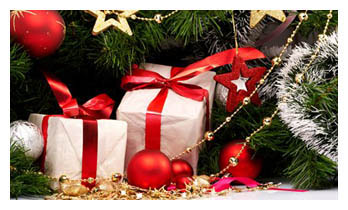
While this is very exciting time you will be challenged with some very cluttered backgrounds. So, unlike most photographic situations, you’ll need to take a more active role in reducing the clutter in your images. Do your images a favour and remove some of that gift wrap. Your Christmas photos will look much better without it.
Be aware that people can count as clutter too. If you’re trying to get a picture of your kids opening a present, it’s probably best not to include someone’s legs in the shot. Unless a person is central to an image, zoom in and leave that person out.
Your Second Biggest Challenge is the Low Lighting:
Unless you live in a hot climate, you probably spend most of your time inside. When you consider that the holiday season is very close to the winter solstice, you’re faced with the reality that there won’t be much natural light for shooting photos on this day. That’s okay because there are few things you can do to get past this little problem.
From experience you should use a flash, but be aware that there’s a good chance of flash blowout. This happens when you get too close to your subject. The light is so bright and intense that it erases the details in the subjects you’re trying to photograph.
Wherever you can, take a few steps back and zoom in on your subjects. This puts a little extra distance between your subjects and the flash, resulting in a much more evenly lit image. You should also try to diffuse your flash (or spread it out) by placing a paper towel or a coffee filter in front of it. It may look a little weird, but the results speak for themselves.
Try Continuous Shooting Mode:
Try setting your camera to continuous shooting mode and then increasing the ISO speed during the day’s more active moments. The high ISO speed allows you to take the picture without using a flash, and continuous mode lets you capture images at the speed of life. The images will be a little more grainy, but sometimes it’s worth it when you capture a special moment and expression. This is perfect when your kids are opening gifts.
Last Thoughts:
You’ll probably take quite a few traditional group photos. Make sure you get these out of the way as soon as you can. As all parents are aware, kids get tired and cranky the later it gets, and adults sometimes are not that much better. Get one group photo inside with decorations, and then move outside for something more natural looking. Take at least five group shots. That way, you can ensure nobody is blinking.