|
Digital Photographers' Newsletter
January 2012 Edition
This months summary
- 10 questions to ask before taking that next image
- How to shoot stars and star trails
- Visionary Swedish Photographer- amazing imagery
- New TIP for Digital Photographers " How to Use your new digital Camera"
- Library Seminar including Camera Workshop on how to use your camera 5pm-7.45pm Thursday 18 January
10 Questions to ask yourself before taking a digital photo
Before you take that next shot, think of the following 10 questions to ask yourself which will help you improve your digital photography. I hope you find them helpful.
1. Will the image tell a story - why am I taking it? This is an important question and one that should help you to make any number of decisions in terms of composition, framing, exposure etc. In essence what you’re  asking is ‘why am I taking this shot? What is it’s purpose and what am I trying to convey?’ Is it purely a way to keep a record of a moment, are you trying to capture the emotion of a moment, is it possibly a shot to give to someone, is it part of a larger series of shots or will it be the only shot to commemorate the moment. asking is ‘why am I taking this shot? What is it’s purpose and what am I trying to convey?’ Is it purely a way to keep a record of a moment, are you trying to capture the emotion of a moment, is it possibly a shot to give to someone, is it part of a larger series of shots or will it be the only shot to commemorate the moment.
2. What is the visual impact or the focal point of the
image? What will viewers of this picture naturally have their eye drawn to in this scene? Once you’ve identified this focal point you can think about where to place it in the frame (consider the rule of thirds for example).
3. Are there multiple focal points? Once you’ve identified what you do want your viewers eyes to be drawn towards and have placed it in the frame – scan your eyes over the shot and see if there are any competing focal points and ask yourself whether they add to or take away from the image? Secondary
 focal points can add depth to shots but they can also be very focal points can add depth to shots but they can also be very
distracting and so you might need to reposition yourself or adjust your focal length and/or depth of field to accommodate or remove them from your shots. Keep in mind that if your shot has more than one focal point that it might be worth taking two shots, one of each focal point, in order to keep things simple.
4. What is in the background and foreground of the image? One of most common places for distractions in digital photography 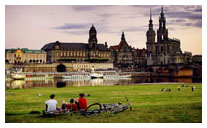 is the background of your shots. Run your eyes over the space behind your subject to see what else is in the image (do the same for the foreground). Consider whether you want the background in focus or nice and blurry. is the background of your shots. Run your eyes over the space behind your subject to see what else is in the image (do the same for the foreground). Consider whether you want the background in focus or nice and blurry.
5. Am I in close enough to the main subject? Another common mistake in digital photography is taking shots where your subject is too small in the 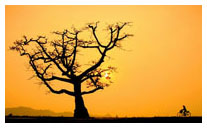 frame. Shots that fill the frame with your subject tend to be much more dynamic and show a lot more detail of your subject. To get this effect you have the option of moving yourself closer, moving your subject closer or using a longer focal length to give the effect of closeness. frame. Shots that fill the frame with your subject tend to be much more dynamic and show a lot more detail of your subject. To get this effect you have the option of moving yourself closer, moving your subject closer or using a longer focal length to give the effect of closeness.
6. What is the light source and where is it coming from?
You can compensate for low 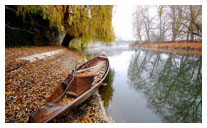 ot high light by doing things like increasing or decreasing the camera lens aperture, shutter speed or ISO setting. What is the main source of light, where is it coming from, is there enough light, do you need artificial light sources (flash etc), do you need to stabilize your camera on a tripod to stop camera shake due to low light etc. ot high light by doing things like increasing or decreasing the camera lens aperture, shutter speed or ISO setting. What is the main source of light, where is it coming from, is there enough light, do you need artificial light sources (flash etc), do you need to stabilize your camera on a tripod to stop camera shake due to low light etc.
7. Is the framing of my image straight? Many otherwise good 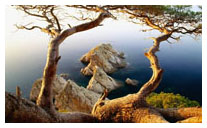 photos can be spoiled by framing that is slightly offline. Sloping horizons and slightly leaning people or buildings should always be in the back of your mind to check. Mind you, you may choose to deliberately tilt your camera for visual effect. photos can be spoiled by framing that is slightly offline. Sloping horizons and slightly leaning people or buildings should always be in the back of your mind to check. Mind you, you may choose to deliberately tilt your camera for visual effect.
8. Are there any other perspectives that would capture
this image more effectively? Put a number ofphotographers in front of a scene and most of them will take exactly the same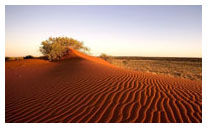 shot from the same position. Make your images stand out from the crowd by challenging yourself to not only take the shot from the same position. Make your images stand out from the crowd by challenging yourself to not only take the
standard shots that everyone else will get but to find creative and fresh angles and perspectives to shoot from.
9. How would holding the camera in the other format change this shot? Many photographers get into the habit of always holding their camera the same way  (horizontally for landscape orv ertically for portrait). While it’s OK to have a preference one way or the other it’s also worth remembering that changing the format can drastically change the impact of the shot. Don’t forget you can also hold your camera at an angle for an effective result too. (horizontally for landscape orv ertically for portrait). While it’s OK to have a preference one way or the other it’s also worth remembering that changing the format can drastically change the impact of the shot. Don’t forget you can also hold your camera at an angle for an effective result too.
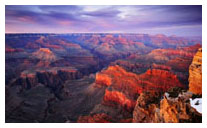
10. When someone views you image, how will their eyes travel through the image composition? This is related to asking about focal points but gets in touch with the fact that while you’re photographing a still image your viewers eyes don’t remain still as they look at an image. People tend to follow lines and are attracted to shapes and colors so considering all of these different visual elements and cues can help improve your shots considerably.
Of course you probably won’t remember all the questions and you’re unlikely to go through each of them with every shot you take – however next time you head out with your digital camera concentrate on asking yourself at least one or two of them as you take your shots. As you do you’ll find that they become more automatic and in time you’ll naturally take digital photography shots that take into account all of these elements.
Visionary Swedish Photographer
 His name is Erik Johansson from Norrköping in Sweden. He is a professional photographer and retoucher mostly working on personal- and commercial projects. For him photography is just a way to collect material to realize the ideas in his mind. He gets inspired by things around him in his daily life and all kinds of things he sees. Every new project is a new challenge and hisgoal is to realize them as realistic as possible. Go and have a look at his work - amazing ... His name is Erik Johansson from Norrköping in Sweden. He is a professional photographer and retoucher mostly working on personal- and commercial projects. For him photography is just a way to collect material to realize the ideas in his mind. He gets inspired by things around him in his daily life and all kinds of things he sees. Every new project is a new challenge and hisgoal is to realize them as realistic as possible. Go and have a look at his work - amazing ...
Make sure you look at his commissioned and illusionary videos while on his website
|
FREE
Photography BASIC NOTES
If you would like a FREE copy of my Basic notes please email request with Subject "Basic Notes"
email 
LATEST TIPs for Digital Photographers gives you advice on How to Use your Digital Camera. Gives you a kick-start to using your camera. This has been shared FREE to our Network members.
If you would like to receive my regular TIPs please send me an email and I will place your contact on my email network.
email
Brisbane Seminars in the Library
Our popular monthly Seminars on BASIC digital photography are held on the third Thursday of every month at the Everton Park Library, BRISBANE from 6-7.45pm.
JANUARY seminar will be THURSDAY 19th
This month's Seminar will include a 2 hour Camera Workshop from 5pm-7pm followed by a discussion group from 7pm-7.45pm. ALL welcome
These Seminars are FREE and are part of our studio community program with the BCC Everton Park Library.
Bookings are essential
Please call the Everton Park Library on
07 3403 7400
to reserve your place.
Local Photographers' Email Network
Are you currently a member of our email network receiving these Newsletters each month and advice of library seminars and discussion groups?
Contact me to get your name on the list (FREE) and receive my regular TIPs For Digital Photographers. Samples of TIPS can be found in past Newsletters (see left column this Newsletter)
email
Lifetime Saturday or Sunday Workshops
Our workshops are offered to assist you to learn the basics of digital photography by practical use of your camera.
By gaining a better understanding you will become more competent and creative. You will marvel at the improvement of your images and be encouraged by your newfound skills.
Please register your interest Don't miss out on having your say to have your favourite subject presented.
email
workshop page here
How to photograph stars
The question was asked last seminar on how you photograph stars and star trails. How do you get the curcular star trails?
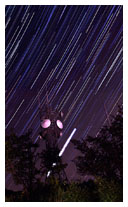
Here are a few good links to techniques for successfully shooting stars and their trails.
Basic tips for photographing the stars
Photographing the night sky
An Introduction to shooting star trails
How to photograph star trails
Photographing stars, solar and milky way. Everything you need to known with numerous other linked sites. Will keep you engrossed for hours!
Hope these links will help in your understanding of how to shoot stars and the equipment and techniques you will need to acquire the skills.
|